
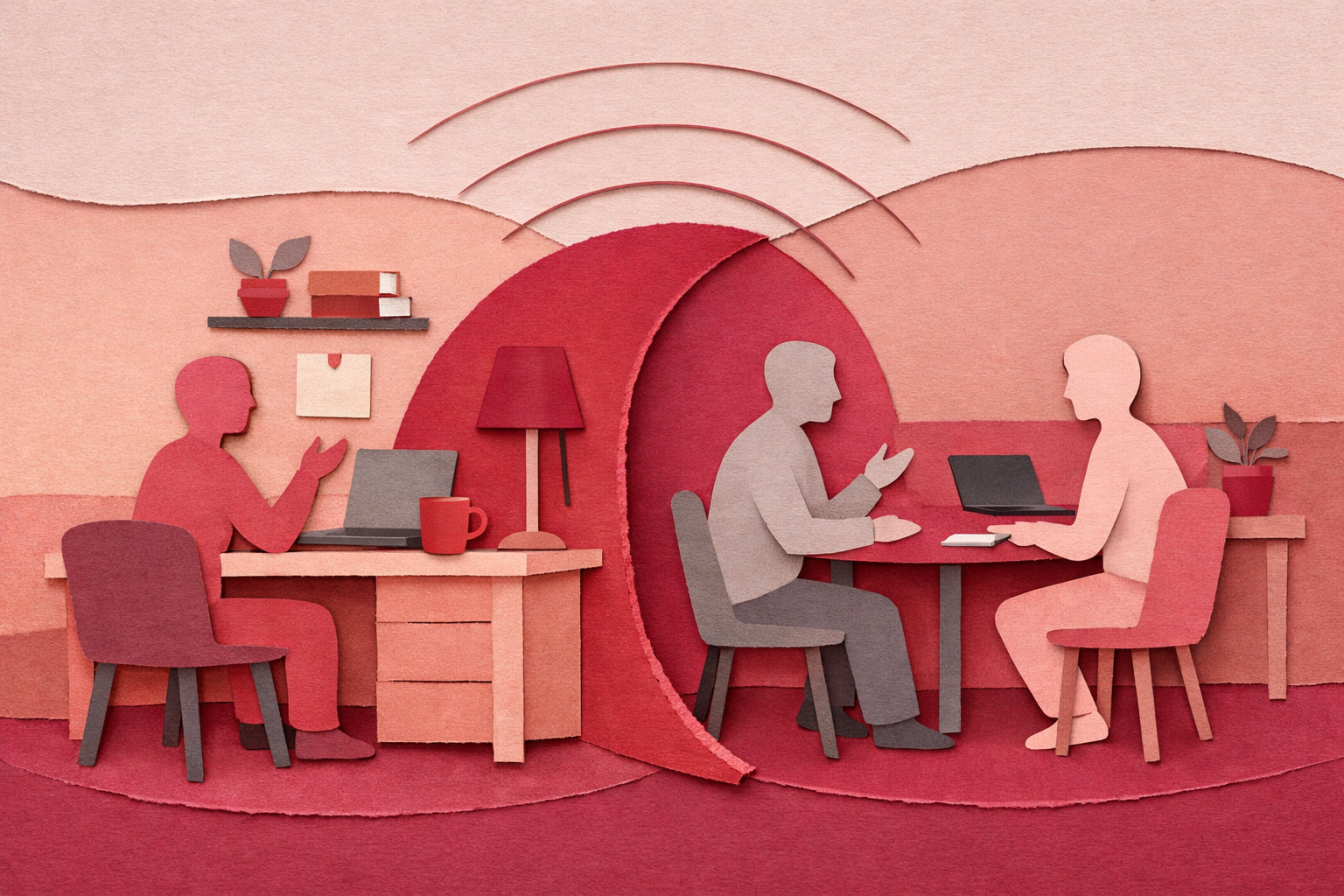
The Invisible Role of ‘Office Noise’ — and How Remote Work Replaces It
We often think remote and hybrid work fixes day-to-day inconveniences: no commute, more flexible hours. What people don’t immediately realise is how it replaces—or intentionally eliminates—the subtle ambient cues that shape behaviour. Office noise isn’t just distraction: it’s a cultural thermostat. The hum of caffeine breaks, the timing of lunch, the casual hallway check-ins all calibrate how and when people work.
When teams go remote, those cues vanish. The solution isn’t to recreate noise, but to design new, low-friction signals: short asynchronous updates, optional ‘open mic’ hours, or visible shared calendars that act as collective rhythm markers. These tiny interventions stop timing mismatches, reduce micro-conflicts about availability and make collaboration feel less like guessing and more like choreography.
Repairing Career Narratives That Offices Used to Tell For You
In physical workplaces, promotion stories were conveyed by proximity: who sat with senior staff, who was asked to client dinners, who got pulled into corridor conversations. Remote work breaks that narrative, which is both terrifying and liberating.
A less obvious problem remote and hybrid models solve is forcing companies to make career progression explicit. When visibility can’t be gleaned from being ‘seen,’ organisations must codify promotion criteria, milestones and mentorship pathways. That clarity helps everyone, especially carers, neurodivergent staff and geographically dispersed talent. It also empowers individuals to shape their own progression rather than rely on office politics.
Fixing the ‘Always-On’ Signal Without Moralising Time
Offices used to create an implicit negotiation about presence: if you stayed late, you were committed. Remote work removed the clock but created a new, subtler pressure: the expectation to respond instantly across time zones.
Good hybrid design addresses this with boundary infrastructure — explicit norms, email-free hours and response-time expectations — instead of moralising work hours. This both reduces burnout and makes asynchronous collaboration a competitive advantage; teams learn to preserve deep work windows and still deliver on urgent items without everybody burning out.
Saving Micro-Equity: Small Signals That Become Big Exclusion
Micro-equity refers to dozens of tiny, often invisible advantages people accrue in an office: being picked for informal projects, receiving face-time with managers, or overhearing client intel. Remote and hybrid setups spotlight and can remedy these disparities.
By making project assignments, learning opportunities and client interactions explicit and trackable, companies reduce the luck factor. Tools and protocols can ensure equitable access—shared talent boards, rotating ‘client liaison’ roles, and transparent selection rubrics. These fixes prevent talent leakage and create a fairer playing field for all.
Rebuilding Rituals, Not Replacing Them: The New Social Glue
One underestimated gift of remote and hybrid work is the chance to reimagine rituals. The office forced daily rituals (commute, desk setup, lunch) that structured our days. Without them, people flounder or make ad-hoc replacements that don’t stick.
The clever solution is to design micro-rituals that are optional, meaningfully communal and scalable: a three-minute start-of-day sync, a fortnightly ‘show-and-tell’ for projects, or a shared playlist for focus hours. These rituals create social glue without manufacturing forced sociability. They also empower teams to create identity and shared memory, even across continents.
Hidden Onboarding Costs and the Opportunity to Systematise Warmth
Onboarding in the office had invisible scaffolding: a friendly desk neighbour, spontaneous walkthroughs, overheard advice. Remote work initially made onboarding feel brittle and transactional.
Smart hybrid programmes intentionally systematise warmth: matched onboarding buddies, scheduled cross-team coffee chats, and short culture primers. These aren’t bureaucratic luxuries — they’re retention levers. If you’re looking for roles that embrace thoughtful hybrid practices, free job boards like Pink-Jobs.com often list flexible, people-centred openings that prioritise these approaches.
Rituals of Identity: How Work Location Shapes Personhood
We underestimate how much location contributes to identity. A commute can be a boundary ritual that shifts you into work mode; a workplace wardrobe can be a confidence cue. Remote and hybrid work expose the lost role rituals and let people choose new ones.
The subtle problem solved here is psychological: employees get to design their transitions and symbols deliberately. Organisations that support those choices — through stipends for home offices, flexible schedules or co-working allowances — help people build consistent, healthy work identities that fit their lives.
The Quiet Win: Broader Talent Markets and the Small Community Effect
Everyone talks about access to talent across geographies. What’s less obvious is how remote and hybrid work fixes ‘community mismatch’: people stuck in jobs that don’t fit their local social ecosystems.
By enabling location-flexible roles, employers allow people to live where they have stronger support networks—family, healthcare, cultural ties—which improves retention, performance and wellbeing. Free, inclusive job boards like Pink-Jobs.com help match candidates to roles that respect geography and life context without gatekeeping.
Practical Takeaways: Small Fixes with Big Returns
If you’re a leader or an individual trying to benefit from remote and hybrid work, start with small, concrete steps:
– Make implicit signals explicit: publish who gets what opportunities and why.
– Replace ambient cues with lightweight rituals: a daily status card or weekly cohort check-ins.
– Systematise onboarding warmth: buddies, scheduled cross-team chats and quick culture primers.
– Set expected response windows and protect deep work time.
– Track micro-equity: rotate client exposure and learning slots.
These modest interventions solve the subtle problems most articles ignore, turning remote and hybrid work from a logistical shift into a humane, high-performing way of working.