
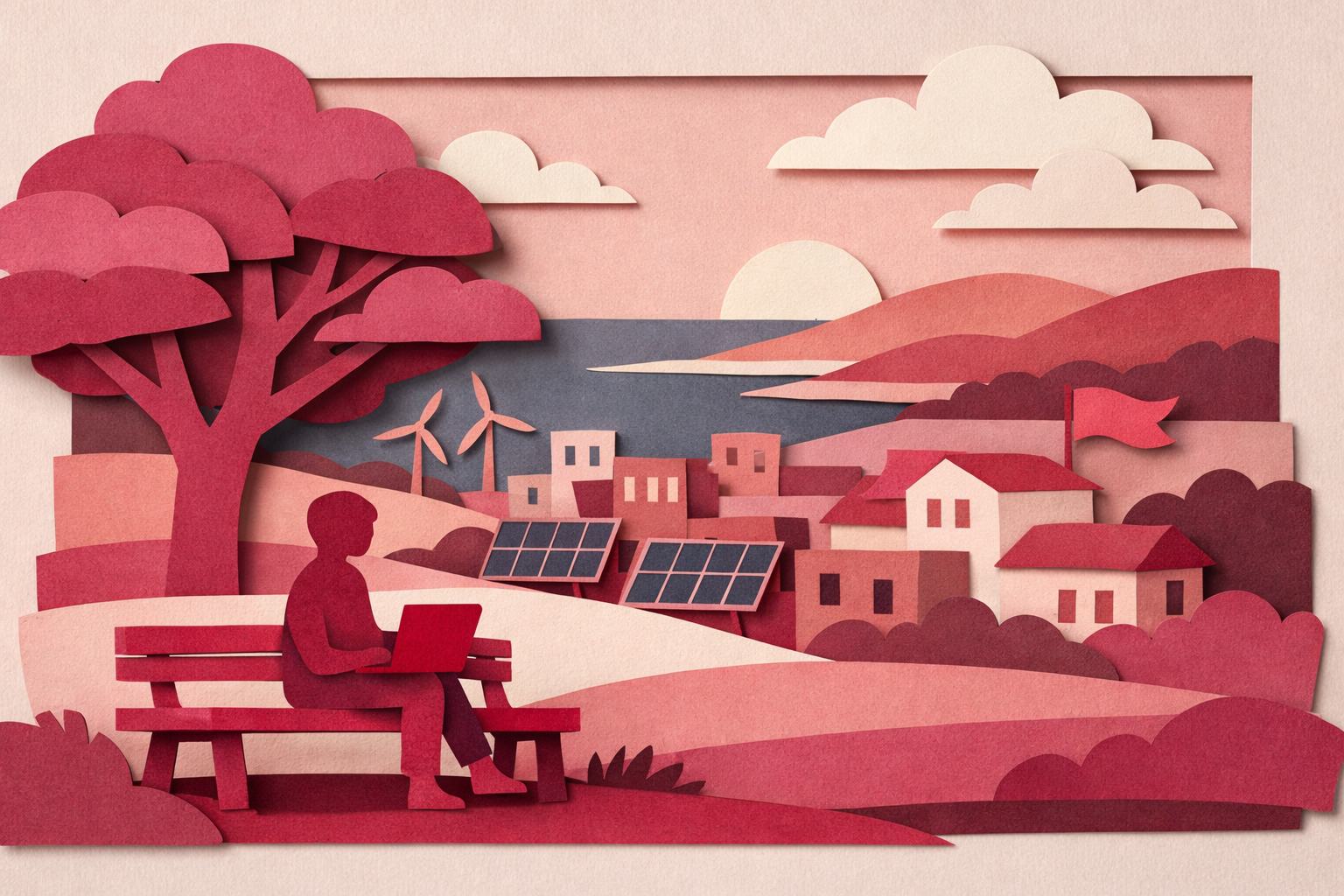
Why sustainability reframes geographical safety for LGBTQ+ workers
Think of remote work not just as freedom from an office, but as a lever that reshapes who gets to live where—and how those places breathe. For LGBTQ+ talent, geographical safety has traditionally meant choosing cities with legal protections and visible queer communities. But when you layer in environmental sustainability, a new set of trade-offs emerges: lower-carbon lifestyles in smaller towns, the resilience of local ecosystems, and the climate vulnerability of so-called safe havens.
This reframing matters. Remote work can move LGBTQ+ workers into greener, less congested areas, reducing commute emissions and urban resource strain. Yet it can also funnel people into fragile rural economies or climate-threatened coastal enclaves that lack inclusive services. The intersection is surprising: choosing safety isn’t only about laws and faces—it’s about flood maps, air quality, public transport, and the capacity of local health and social services to support queer lives over the long run.
Low-carbon relocations: queer migration as a sustainability strategy
Many LGBTQ+ professionals are considering moving out of high-density cities to reduce living costs and carbon footprints. This phenomenon can be consciously sustainable. Shared housing, smaller dwellings, and proximity to green spaces often lower per-capita emissions. Remote-first roles allow people to select communities that balance inclusivity and environmental performance—places with renewable energy, strong waste systems and active public transport.
But there’s nuance. A move to a house in an off-grid area might increase car dependence and embodied carbon from renovations. The key is intentionality: LGBTQ+ workers can prioritise low-carbon infrastructure when deciding where to base themselves, advocating for bike lanes, local green energy co-ops and community-owned broadband. Employers and platforms can nudge such choices by offering relocation guidance that includes sustainability criteria.
Resilient queer communities: local ecosystems matter
Environmental resilience—how a place weathers storms, heatwaves and supply shocks—directly affects geographical safety. Communities with strong local food networks, community healthcare, and green public spaces are often better at supporting marginalised people during crises. For LGBTQ+ folks, resilience translates into continuity of care, continuity of chosen family and fewer disruptions to safe spaces.
Remote workers can play a positive role here. By participating in local circular economies, volunteering for community resilience projects, or supporting queer-led sustainability initiatives, remote professionals help shore up the very infrastructure that keeps them safe. It’s a two-way deal: you gain safety and belonging while strengthening a locale’s environmental and social defences.
The urban paradox: greener cities versus queer visibility
Cities typically offer the most visible LGBTQ+ infrastructure—clinics, groups, culture—yet many urban cores are also carbon-heavy and increasingly unaffordable. Conversely, smaller places may be greener but lack services and visible communities. Remote work forces a reckoning: can we build small-to-mid-sized towns that are both sustainably designed and queer-supportive?
The surprising opportunity is hybrid planning. Towns that invest in compact, walkable neighbourhoods, green roofs, community centres and anti-discrimination policies can attract queer talent fleeing city emissions without sacrificing visibility or safety. Remote workers, activists and local councils collaborating on such transitions create prototypes for sustainable, inclusive living that scale beyond cities.
Practical strategies for LGBTQ+ remote workers who care about the planet
Make environmental safety part of your location checklist: check climate risk maps, public transport quality, local renewable projects and proximity to community health services.
Choose housing with an eye to embodied carbon and energy efficiency—retrofits beat new builds when feasible. Engage locally: join or start queer sustainability groups, and push for inclusive climate planning.
Negotiate with employers for green relocation packages: contributions to local public transport passes, support for community solar subscriptions or stipends for low-carbon home office upgrades. Platforms like Pink-Jobs.com can help you find remote roles while keeping accessibility and inclusivity front of mind—use job searches to align employer values on both diversity and sustainability.
Employers, platforms and policymakers: the levers for systemic change
Employers can map climate and inclusivity together in their location policies: offer choices informed by environmental risk and queer safety, fund community resilience projects where remote talent resettles, and report on the carbon impacts of distributed workforces.
Job platforms and recruiters should surface sustainability data alongside inclusivity ratings—think climate risk badges, local green infrastructure notes and community service directories. Policymakers can incentivise towns to create queer-friendly, low-carbon housing and mandate emergency plans that explicitly include LGBTQ+ service needs.
These levers turn individual relocation decisions into collective gains: reduced emissions, stronger local ecosystems and safer, more durable communities for LGBTQ+ people everywhere.
A closing note: sustainability as a compass for safe belonging
Geographical safety for LGBTQ+ talent needn’t be a binary between a tolerant city and a green countryside. When we place sustainability at the heart of remote work decisions, new hybrid geographies emerge—resilient, affordable and inclusive places where queer lives can flourish without costing the planet.
If you’re on the move, think beyond laws and pride flags: scout local ecosystems, connect with community projects, and use inclusive job boards like Pink-Jobs.com to find roles that match your values. Safety, it turns out, is also about air quality, stable food supply and a neighbourhood that will weather the next storm with you.