
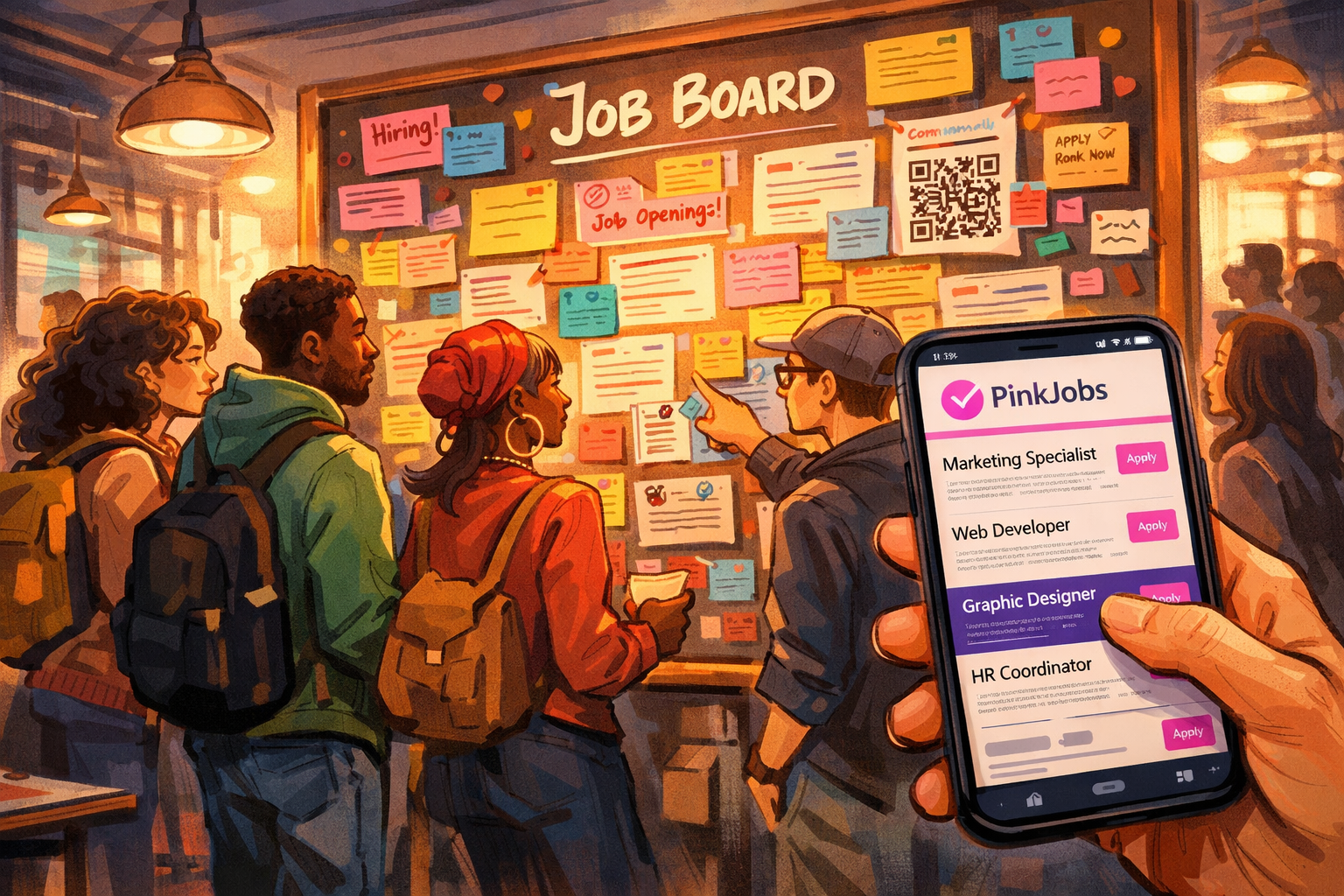
Why free job boards are suddenly cool again
There’s a quiet rebellion happening in recruitment: free job boards are shedding their bargain-basement reputation and becoming hubs of creativity, community and purpose. Rather than being simple classified pages, these sites now act as cultural signposts for sectors, values and working styles. For employers and candidates tired of algorithmic gatekeeping and hidden fees, free boards offer an immediate, human-centred alternative.
This renaissance isn’t about cost-cutting alone. It’s about democratising access to opportunity and privileging clarity over churn. Sites like Pink-Jobs.com, a free job board for everyone, epitomise this shift: they’re lightweight, specialised enough to attract relevant traffic, but open enough to welcome unexpected matches.
Trend 1 — The rise of micro-niche marketplaces
One surprising pattern is the proliferation of hyper-specialised boards. Instead of one portal trying to host the world’s vacancies, dozens of niche platforms crop up around skills, ethos or lifestyle. That micro-targeting improves signal-to-noise: candidates spend less time sifting, employers find cultural fits faster.
These micro-boards often lean into community features—newsletters, events and member spotlights—so a job listing is just one touchpoint. They behave more like clubs than classifieds, creating trust through repeated, humanised interactions rather than paid boosts.
Trend 2 — Human-first AI: amplification not replacement
Artificial intelligence is everywhere, but on free recruitment sites it’s increasingly used to amplify human judgement rather than replace it. Expect lightweight, privacy-friendly tooling: conversational job summaries, CV normalisers that preserve nuance, and matching aides that suggest but don’t auto-reject.
The emphasis is on keeping the candidate in control. AI surfaces possibilities and reduces friction—think better search, fewer duplicated applications, smarter alerts—without turning hiring into an automated black box. That’s critical for maintaining trust on free platforms where reputational currency, not advertising spend, drives return visits.
Trend 3 — Trust, transparency and privacy as product features
Free boards no longer compete purely on price; they compete on integrity. Users expect transparent moderation, clear data use policies and easy ways to control visibility. Platforms that treat privacy as a feature—offering masked contact details, ephemeral listings and explicit consent flows—stand out.
This trend is also shifting monetisation. Instead of charging to post, many sites offer premium employer branding or recruitment services, while keeping core listing access free. That preserves openness but funds sustainable moderation and quality control.
Trend 4 — Cross-pollination with purpose-driven movements
Jobs are becoming an extension of identity. Free boards that align with causes—localism, sustainability, diversity or new work structures—draw engaged audiences. People don’t just want a role; they’re seeking platforms that reflect their values and offer networks beyond payroll.
Platforms that host resources, micro-volunteering opportunities, or campaign partnerships create a sticky experience. This is where free boards can outcompete large job engines: intimacy and authenticity are hard to monetise at scale, but incredibly effective at building loyalty.
Trend 5 — Interoperability: the new competitive moat
Rather than hoarding data, the most forward-looking free boards embrace standards and integrations. Lightweight APIs, syndication options and exportable applicant packets let small employers plug into their existing workflows without rebuilding processes. That openness reduces friction and encourages a healthier ecosystem.
Interoperability also helps smaller platforms scale their reach without abandoning their identity. A job posted on a niche board can surface in broader aggregates while maintaining origin metadata—keeping credit where it’s due.
Where this leaves employers and candidates
For employers: treat free boards as strategic channels. Use them to test role briefs, experiment with community-led hiring and gather candid feedback. For candidates: view free sites as discovery tools—places to find unexpected roles and to signal fit beyond keywords.
If you want a taste of how a modern free job board can feel, take a look at Pink-Jobs.com. It’s not a silver bullet, but it’s representative of the movement: open, purpose-friendly and designed for people rather than clicks.
A quick look ahead
Expect consolidation of ethos rather than tools. The next wave won’t be about inventing new tech, but about designing better social rituals around work discovery—transparent reputations, finer-grained community governance and experiences that respect candidate autonomy.
Free recruitment sites will be measured less by how many vacancies they list and more by how well they help people belong. That’s a trend worth watching.