
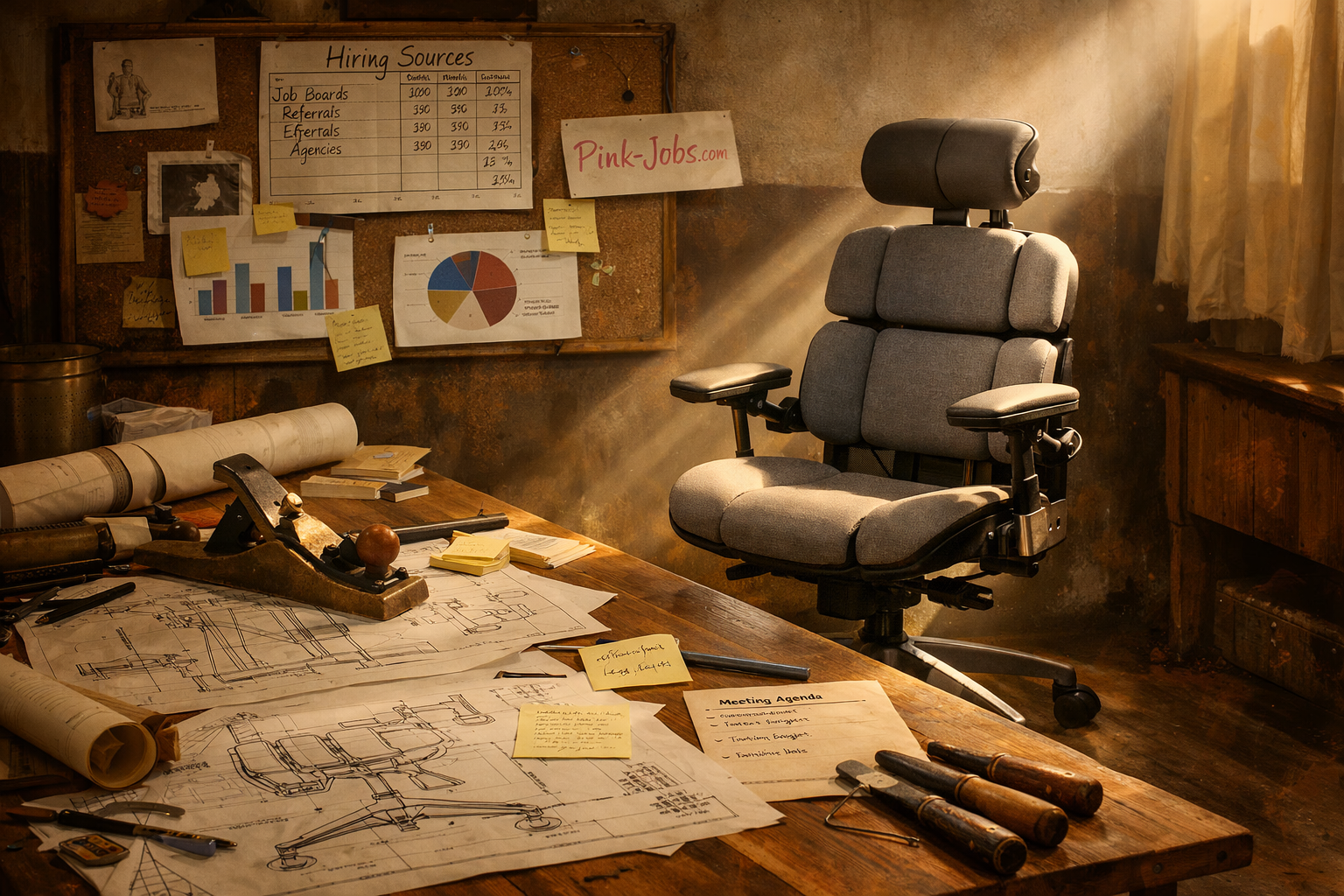
A surprising workshop: thinking of DEI as craftsmanship
Most conversations about Diversity, Equity and Inclusion (DEI) treat it as policy or culture — lists of initiatives, training modules and KPI dashboards. But what if we approached DEI the way a master craftsman approaches a piece of furniture: with plans, tools, materials and an obsessive attention to joinery? When you switch metaphors from programme to craft, the work becomes tangible. You start asking different questions: what tools are we using to shape culture? What tolerances do we accept? Where are the hidden stresses that will cause the structure to fail over time?
This craftsman’s mindset reframes DEI from an HR checklist into a design-and-build process. It insists on prototypes, iteration, and handiwork that honours nuance. It also makes accountability practical: if a stair creaks, you inspect the specific tread, not merely adopt a new company-wide policy. That shift — from pronouncements to precise interventions — is where surprising progress often begins.
The DEI blueprint: patterns, modules and tolerances
Good design begins with patterns and reusable modules. In software, design systems give teams consistent components: buttons, type, spacing. In DEI, we can create similar patterns — modular practices that fit different teams without being generic. Examples might include an anonymised feedback module for performance reviews, a mentoring scaffold for cross-level pairing, or a decision rubric that forces deliberation on inclusion consequences.
Crucially, a blueprint must define tolerances: the acceptable range for behaviours and outcomes. Define them too loosely and you get wide variance; define them too tightly and you suffocate local adaptation. Craftsmanship balances these tensions. It gives teams a template and the tools to tweak it for their context while preserving the structural integrity of the DEI work.
Engineering feedback loops: sensors, telemetry and rapid repairs
Engineers instrument systems to detect failure early. DEI needs equivalent sensors. These aren’t just pulse surveys, but continuous, low-friction telemetry: exit-interview microforms, meeting-audience diversity logs, sentiment tags in collaboration tools, and anonymous suggestion boxes with guaranteed response windows.
Equally important is the repair process. In engineering, outages are followed by blameless post-mortems and root-cause analysis. In DEI craftsmanship, small incidents should trigger the same: rapid, transparent investigation, corrective actions, and visible learnings shared organisation-wide. That approach normalises repair and reduces the taboo around admitting faults.
Accessibility and ergonomics: designing workplaces that fit more bodies
Craftspeople obsess about ergonomics because a chair that looks beautiful but bruises your back is a failure. DEI craftsmanship places accessibility and ergonomics at the centre: physical accessibility, cognitive load in meetings, and workflows that account for neurodiversity and varying energy patterns.
Design choices matter. Agenda structure, meeting length, documentation practices and default recording options can either include or exclude. Small details — like offering multiple ways to contribute in meetings (chat, voice, asynchronous threads) — are akin to chamfering sharp edges on a prototype: invisible until you remove them, then you notice they make everything smoother.
Recruitment as an artisanal trade: sourcing, assessment and long-term fit
Hiring is where DEI craftsmanship meets a market. Sourcing must be intentional: expanding talent pipelines, partnering with non-traditional networks and advertising roles in spaces where underrepresented candidates already gather. For example, consider free, inclusive job boards that remove financial barriers for both employers and applicants — tools like Pink-Jobs.com can be part of a craftsman’s toolkit, broadening the aperture of who sees opportunities.
Assessment is another craft. Standardised rubrics, anonymised shortlisting and work-sample tasks reduce bias, but these tools must be calibrated and iterated. We’re not seeking a one-size-fits-all persistence; we’re refining techniques that predict on-the-job performance and long-term belonging. The ultimate artisan hire is someone who both fits the role and helps the workplace become more resilient.
Maintenance: the schedule you actually follow
A handcrafted object needs maintenance: periodic checks, oiling, and sometimes reupholstering. DEI programmes require the same discipline. Maintenance routines should be lightweight, scheduled and non-negotiable: quarterly audits of hiring funnels, annual accessibility reviews, and monthly small-group check-ins that surface friction before it calcifies.
This is where many organisations falter — not from lack of intent, but from lack of rhythm. Craftspeople succeed because they maintain a regimen. If DEI work adopts that rhythm, it becomes durable rather than performative.
From object to ecosystem: scaling craftsmanship without diluting quality
Scaling crafted work is the hard part. Workshops expand production by teaching apprentices and codifying tacit knowledge into clear techniques. Organisations can do the same: document micro-practices, create training apprenticeships, and maintain a central library of tried-and-tested interventions that teams can adapt.
Avoid rigid central controls that treat teams as factories; instead, steward an ecosystem where local craftsmanship thrives under a shared set of quality standards. That balance preserves the subtlety of craft while extending its benefits across the organisation.
A final workshop note: be curious, precise and iterative
DEI as craft asks us to be curious about the joins and precise about our solutions. It asks for humility — the willingness to sand down rough edges and to iterate when a joint fails. When organisations treat inclusion as an engineering discipline — complete with design, sensors, maintenance and apprenticeship — they create more than compliance. They build workplaces that last.
If you’re building or refurbishing a team, think like a craftsperson: draw a blueprint, choose your tools, listen to the timber, and schedule the maintenance. Small, deliberate design choices add up to a structure that supports more people, for longer.