
Shopping for BAME In The Workplace: A Strange Metaphor That Actually Works
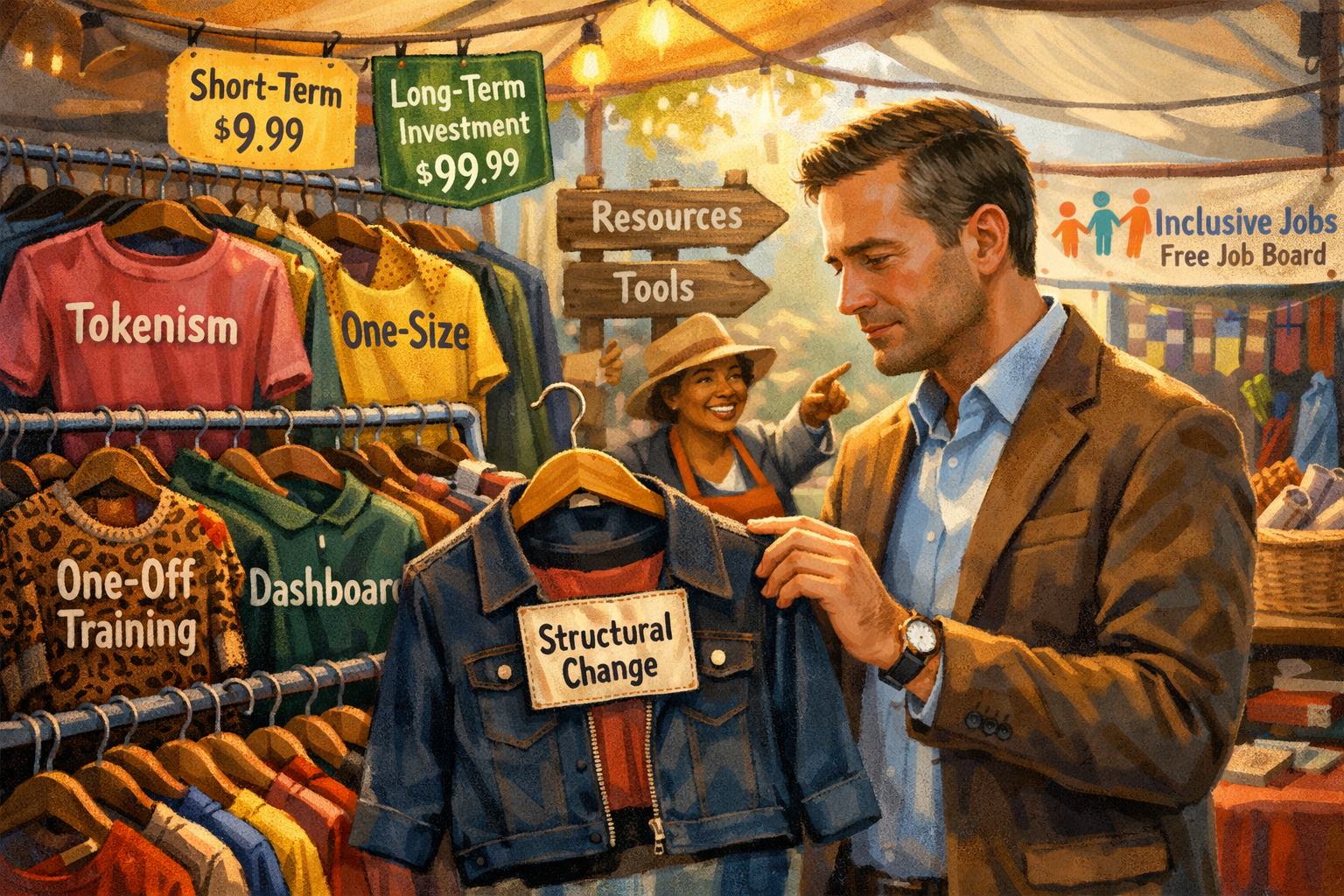
Imagine you’ve wandered into a market stall labelled “BAME In The Workplace” and you’re asked to pick a ready-made solution off the shelf. Affordable, pretty packaging, one-size-fits-all. Sounds convenient, right? The problem is nothing in the stall was grown, tailored or sourced with your workplace in mind — it’s a curated, generic mix that looks good on display but won’t survive daily wear.
This article treats BAME inclusion like a shopping trip to highlight the choices people make when they try to “buy” diversity and inclusion. Spoiler: most of the time they buy the wrong thing. We’ll walk through the top mistakes people make, why each mistake is costly, and practical swaps that actually fit. If you’re hiring or designing workplace programmes, think of this as your buyer’s guide — with fewer sales pitches and more honesty.
Mistake 1 — Buying Tokenism: The Fast-Fashion Approach
Tokenism is the fast-fashion equivalent in diversity: cheap, visible, and destined to fall apart. Organisations hire one or two BAME people for optics, put them in highly visible roles or communications, then wonder why turnover is high and engagement is low.
This mistake creates a brittle culture. The person who’s supposed to “represent” an entire community ends up exhausted and unsupported. It also signals to other BAME colleagues that the workplace is about appearances rather than real change.
Swap to: invest in structural changes. Recruitment, progression and retention practices must be audited and fixed. Provide mentorship, sponsorship and real decision-making power — not just photo opportunities.
Mistake 2 — Assuming Homogeneity: Treating BAME as a Single Product
‘BAME’ is a useful shorthand but treating it as one homogeneous group is like expecting one shoe size to fit everyone. Different communities have different histories, languages, migration stories and socio-economic backgrounds. Lumping them together erases nuance and creates interventions that miss the mark.
Organisations that package a single training module labelled “BAME awareness” then expect miracles are setting themselves up to fail. The result is alienation and programmes that feel irrelevant or patronising.
Swap to: segment your insight. Use employee resource groups, anonymised surveys and listening sessions that respect difference. Design multiple pathways and recognise intersectionality — ethnicity interacts with gender, disability, class and religion.
Mistake 3 — Over‑reliance on Dashboards: When Data Becomes Decorative
KPI dashboards and diversity scorecards can be brilliant, but they’re often used as decorative substitutes for messy human work. Many managers equate a nice chart with progress and ignore the lived experience behind the numbers.
Dashboards don’t tell you who doesn’t feel safe to speak up, who can’t access sponsorship opportunities, or which microaggressions erode morale. Worse, they can be weaponised to avoid accountability: “We’re meeting targets, so nothing to see here.”
Swap to: combine quantitative and qualitative data. Pair metrics with regular narrative reports, exit interview analysis and culture audits. Use data to ask better questions, not to close the conversation.
Mistake 4 — One‑off Training: The ‘Tick‑Box’ Course Trap
A single unconscious bias workshop is popular because it’s simple to book and easy to tick off the learning management system. But like a 90-minute crash course in cooking to become a chef, it won’t change habits.
Training that’s one-off and generic can also provoke backlash if participants feel lectured or wrongly accused. Long-term behaviour change requires repetition, role modelling and systems that reward inclusive behaviours.
Swap to: create a learning journey. Mix cohort-based programmes, practical coaching, leadership accountability and feedback loops. Embed inclusive hiring rubrics, interview panels and progression criteria into everyday HR processes.
Mistake 5 — Neglecting Accessibility and Practical Inclusion
Too many initiatives focus on visible elements — brand stories, multicultural days, celebratory posts — while ignoring practical accessibility. Those are important, but if meeting times clash with religious observances, if application processes require UK-centric experience, or if workplaces lack prayer spaces or dietary consideration, inclusivity becomes performative.
Accessibility isn’t a nice-to-have; it affects who can apply, who can stay and who can thrive. Neglecting it means losing talent before you even begin to build trust.
Swap to: audit practical barriers. Review job descriptions for unnecessary criteria, offer flexible working, ensure culturally safe spaces and reasonable adjustments. Make sure policies are lived, not just written.
Buying Smart: A Practical Checklist for Better Decisions
Treat your inclusion strategy like smart shopping. Here’s a concise checklist you can use before you commit to any new initiative:
– Define the problem precisely: who is affected and how?
– Mix metrics with stories: use both numbers and narratives.
– Fund long-term change, not one-off optics.
– Consult the communities affected, not just diversity consultants with no lived experience.
– Make leadership accountable with clear sponsorship responsibilities and measurable outcomes.
If you’re hiring and want the widest possible pool, consider listing roles on inclusive platforms — for example, you can post opportunities on Pink-Jobs.com, a free job board that’s open to everyone and can help widen reach without cost barriers.
A Final Thought: Buy Less, Choose Better
The safest way to shop for BAME inclusion is to stop treating it like a product at all. Invest time in listening, design with specificity, and be willing to iterate. The cheapest option is rarely the right one; the most visible option is rarely the most durable.
If you approach inclusion like considered buying — with research, consultation and an eye for long-term fit — you’ll end up with something that not only looks good on paper but actually changes the way your workplace feels.