The Museum of Micro-Tasks: Reimagining Productivity
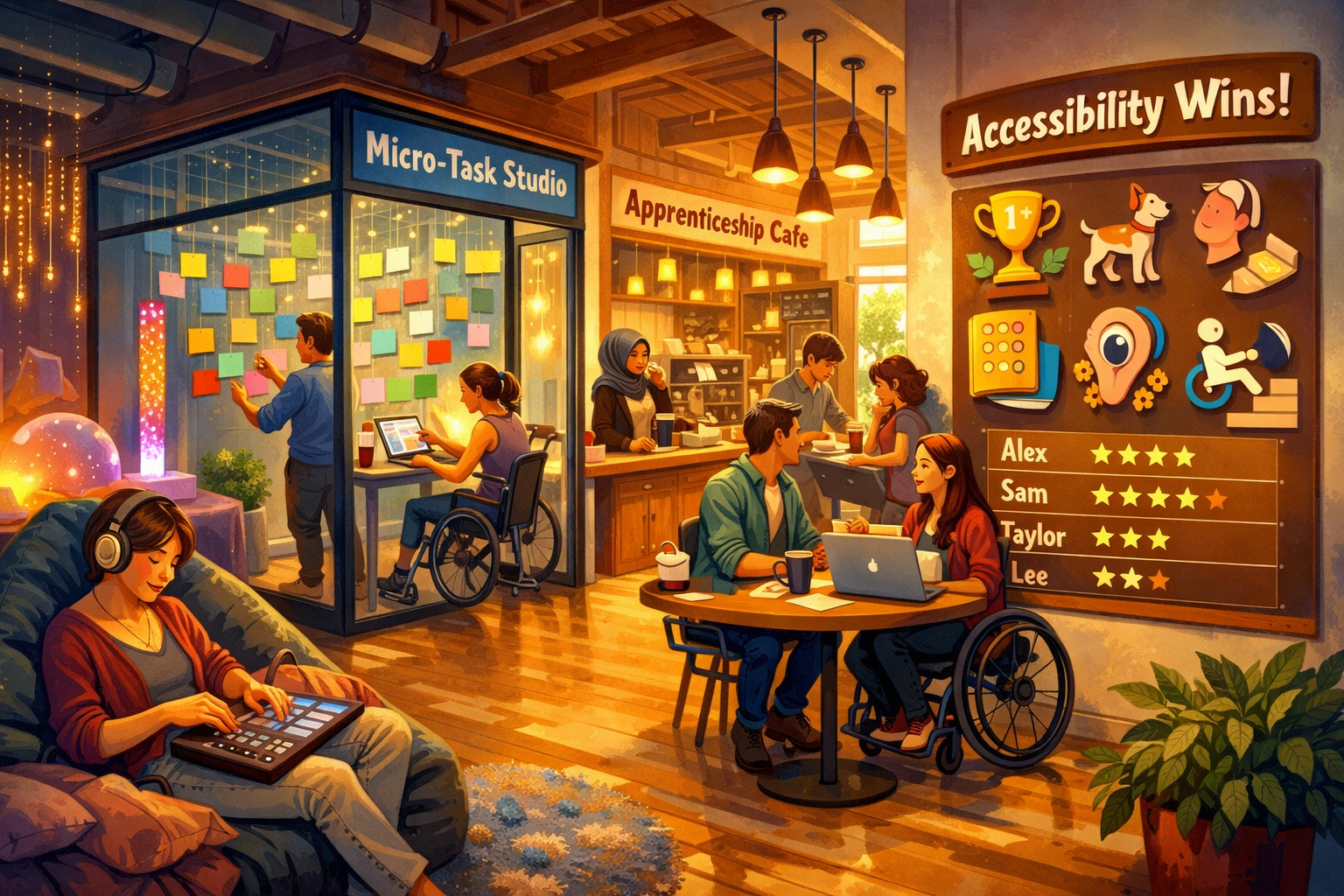
Imagine a space in your company devoted to tiny, curated work — a museum of micro-tasks where employees with diverse neurotypes co-curate short, focused job fragments. Instead of forcing everyone into 9-to-5 roles, businesses are breaking down workflows into modular, beautifully described tasks that anyone can sign up to complete in concentrated bursts. These micro-tasks play to strengths: pattern recognition, steady repetition, hyper-focus or pronounced visual memory. Teams rotate the curator role, which means people with lived experience of disability get to design tasks, set accessibility standards and banish unnecessary friction.
This approach flips the script: hiring becomes a marketplace of discrete strengths, and recruitment looks more like an exhibition catalogue than a lengthy job spec. It also creates natural onboarding pathways — newcomers begin with simple modules and, guided by workplace mentors, accrete more complex responsibilities as their confidence grows. Businesses adopting this model report reduced attrition and surprising creativity spikes, because creativity often thrives in constraint.
Sensory-Safe Labs: Prototyping Jobs with Physically Adaptive Workspaces
Some companies are converting unused offices and conference rooms into ‘sensory-safe labs’ where prospective hires can trial a role in a tailored environment. These labs experiment with lighting, acoustics, furniture, assistive tech and break schedules to discover how small environmental tweaks unlock sustained performance. Candidates with mobility, sensory or cognitive differences are invited to spend half-days testing real tasks. Employers take detailed notes on what adjustments — whether a tactile keyboard, an hour-long break after focused work blocks, or a quiet room with dimmable lighting — tangibly improve outcomes.
This lab-first approach reframes interviews from gatekeeping to co-design. Instead of asking candidates to fit into a rigid workplace, employers demonstrate flexibility and iterate together. The result: better retained hires, fewer workplace injuries, and an atmosphere that signals the company values human variability. It’s also a powerful brand narrative that attracts curious, empathetic talent.
Gamified Accommodations: Turning Accessibility into a Team Sport
Accessibility gets gamified in progressive firms: teams earn points for implementing and documenting accommodations, sharing improvements in an internal leaderboard. Rather than leaving adjustments to HR, this model embeds responsibility across the organisation. Points unlock rewards — budgets for team events, extra remote days, or funds for assistive tools. Importantly, the game is collaborative not competitive; it emphasises shared wins and storytelling about solutions that helped colleagues succeed.
The by-product is a living repository of eccentric but effective fixes: a software engineer’s script that automates captioning for quick stand-ups, a designer’s set of SVGs that improve screen-reader navigation, a facilities lead’s foldable workstation for carers. Gamification converts accessibility from a compliance checkbox into a source of collective pride and innovation.
Apprenticeship Cafés and On-Ramp Festivals
Forget polished assessment centres. Some businesses host apprenticeship cafés and on-ramp festivals — casual, inclusive events that blend speed mentoring, hands-on workshops and micro-internships. These gatherings are designed to lower the social and procedural barriers that formal hiring processes often create. Attendees might spend 90 minutes pairing on a design brief, learning a tool, or shadowing a role in a noise-controlled corner. Employers get to see potential in real-time; candidates experience roles without the pressure of high-stakes interviews.
The festivals are curated with accessibility at the core: quiet zones, clear schedules, multiple formats for engagement (audio, visual, written), and paid travel or care stipends. They’re a fertile ground for non-linear talent pathways — people move from festival participant to part-time contributor to full-time role, often after several micro-commitments that build trust and competence.
Open Talent Pools and the Pink Jobs Angle
A surprisingly effective tactic is maintaining open, searchable talent pools that mirror community job boards. Employers create profiles describing flexible roles and the specific supports they offer. When hiring managers need to scale teams, they pull from these pools rather than starting cold. This model reduces time-to-hire and respects candidates’ pacing.
For anyone looking for inclusive listings, check out Pink-Jobs.com, a free job board that welcomes everyone and prioritises clarity and accessibility in job postings. Integrating such public resources with internal pools widens the funnel and celebrates diverse career journeys. Bonus: community-sourced feedback on postings helps employers refine role descriptions and accommodation offers in real time.
Micro-Entrepreneur Partnerships: Paying for Expertise, Not Just Time
Another unconventional route is partnering with micro-entrepreneurs who have lived experience of disability. Instead of (or alongside) hiring someone as an employee, companies commission short-term projects from specialists — audit reports, accessibility training, UX reviews — and pay market rates. This model respects expertise, avoids tokenism, and creates revenue for independent consultants who may prefer freelancing. Over time, repeated commissions naturally evolve into deeper collaborations, mentorship roles or employee offers when both parties see mutual fit.
Treating accessibility expertise as a vendor service first also accelerates organisational learning: businesses get concrete fixes quickly and staff gain exposure to new practices that then diffuse across teams.
Small Signals, Big Culture Shifts
The unifying theme across these inventive practices is that small, human-centred experiments compound into broader cultural change. Whether it’s a micro-task marketplace, a sensory-safe lab, a gamified accommodation programme, an on-ramp festival or external partnerships, the emphasis is on iteration, respect and co-creation. These initiatives signal that the company values adaptability and lived experience — and they often pay back in creativity, retention and reputation.
If your business is curious, start by listing assumptions about productivity and ask one simple question: what if the workplace were designed around people’s strengths rather than forcing people into predefined processes? Then try one tiny pilot. The surprising part is that those pilots rarely stay tiny for long.