
Introduction: Why Rethink Disability Employment Now
The workforce is changing rapidly — and so must our approach to disability employment. Advances in technology, growing awareness of neurodiversity, and evolving labour markets present an opportunity to redesign roles, recruitment and workplace supports so that more people with disabilities can participate meaningfully and sustainably. This is not simply a compliance exercise; it is a strategic, social and economic imperative.
This article sets out a practical, scalable idea — Inclusive Micro-Work Hubs with Supported Pathways — and explores how employers, policymakers and community organisations can collaborate to make it real. The focus is on tangible steps, modern accommodations and measures that deliver lasting employability rather than short-term placements.
The Idea: Inclusive Micro-Work Hubs with Supported Pathways
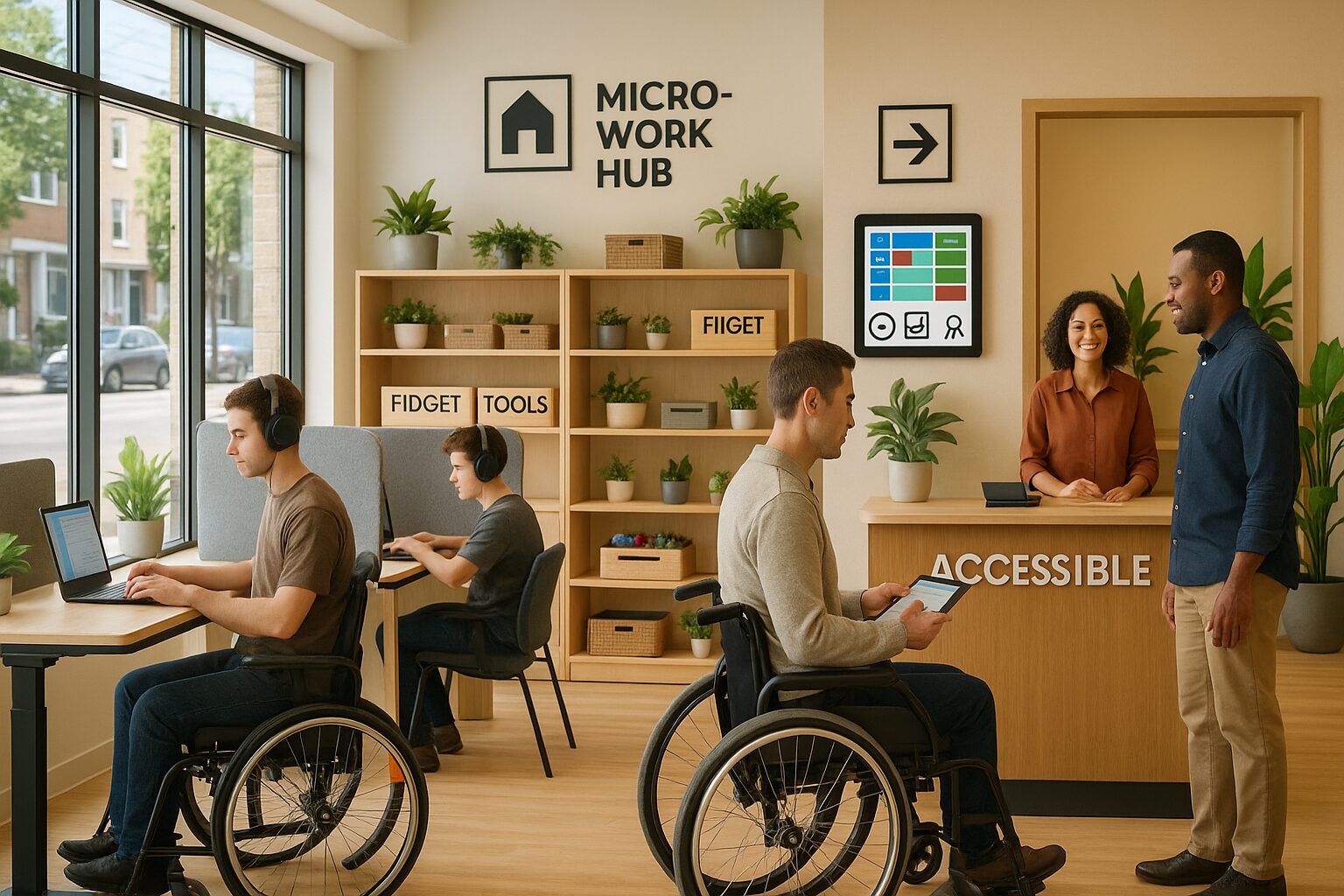
At the heart of the concept are local micro-work hubs: flexible, accessible workspaces that host short, modular roles and projects specifically designed to match diverse strengths. Hubs operate in partnership with employers, charities and education providers to offer graded responsibilities, onsite support and clear progression routes into mainstream employment.
Each hub combines three elements: purpose-built workspace with universal design features; a roster of micro-roles and project-based tasks aligned to employer needs; and a supported pathway team (job coaches, occupational therapists, digital coaches) who tailor adjustments and help individuals build skills and confidence. The model is especially helpful for people who benefit from phased entry, flexible hours or bespoke task adjustments.
Why this Model Works: Benefits for Individuals and Employers
For jobseekers with disabilities the micro-hub model reduces barriers to entry. It allows concentrated skills development in a lower-risk environment, gives real work experience on a CV and creates clear routes into longer-term roles. It also supports those who need adaptations such as flexible scheduling, assistive technology or predictable routines.
Employers benefit from a diverse talent pool, lower recruitment risk through trial placements and improved retention where roles are well matched. Organisations also gain from quick access to niche skills for short projects and a practical mechanism to meet social value and corporate responsibility goals.
Design and Accessibility: Building Truly Inclusive Spaces
Design is central. Hubs should adopt universal design principles: level access, adjustable desks, clear wayfinding, quiet zones, good lighting and sensory-aware layouts. Technology must be integrated from the outset — captioning, screen readers, speech-to-text, simplified user interfaces and flexible communication tools support a broad range of needs.
Crucially, accessibility is not only physical or digital. Policies on break patterns, predictable schedules, task decomposition and visual instructions make work manageable for people with cognitive or neurodiverse conditions. Regular user testing with people with lived experience ensures spaces and processes remain fit for purpose.
Implementation Steps for Organisations and Community Partners
Start small and iterate. Pilot a single hub in a partner location with a handful of micro-roles co-designed with employers. Collect qualitative and quantitative data from day one — retention rates, progression into sustained roles, participant satisfaction and employer feedback.
Key practical steps include: establishing a steering group of employers, disability organisations and local authorities; securing funding for initial adaptations and job coaching; developing standard role templates that allow modular adjustments; and creating a referral and assessment pathway that focuses on strengths and aspirations rather than deficits.
Technology and Accommodations: Practical Tools That Make a Difference
Assistive technology should be an enabler, not an afterthought. Affordable tools — noise-cancelling headphones, screen magnification, alternative keyboards, text-to-speech software and communication apps — can transform a person’s employability. Integrating cloud-based collaboration platforms and remote-access options also widens participation for those for whom travel is a barrier.
Train staff on inclusive remote and in-person practices, and ensure IT procurement considers accessibility criteria. Small investments in technology often yield outsized returns in productivity and retention.
Measuring Success and Scaling the Approach
Define success metrics early: progression to sustained employment, average tenure, job satisfaction, employer repeat engagement and cost per placement. Use mixed methods — routine monitoring plus interviews and case studies — to capture nuance and lived experience.
When pilots show positive outcomes, scale by franchising the hub model, sharing open-source role templates and training modules, and creating a central knowledge hub. Public-private funding mixes, social impact bonds and employer consortiums can underwrite expansion while keeping services locally responsive.
Practical Tips for Employers and Jobseekers
For employers: start with small, time-bound roles to test-fit candidates; involve managers in co-designing adjustments; use job coaching and buddy systems; and review performance metrics through an inclusion lens. Small adaptations often have a large impact, and creating a culture of psychological safety is as important as physical access.
For jobseekers: seek opportunities that offer supported entry and clear progression; consider micro-roles as stepping stones to longer-term positions; and use resources and networks that list inclusive vacancies. For example, you might explore free online job boards such as Pink-Jobs.com to find roles that welcome a diverse range of applicants. Keep a record of transferable skills built in micro-roles — employers value demonstrated experience even in short placements.
Policy Implications and Final Thoughts
Public policy should incentivise employers to trial inclusive models, fund intermediary support services and require transparency in reporting outcomes. Local authorities can play an active role by enabling affordable space and linking hubs to adult learning and transport programmes.
Inclusive Micro-Work Hubs with Supported Pathways are not a silver bullet, but they offer a realistic, human-centred way to close employment gaps. With careful design, collaborative governance and a willingness to learn from participants, this model can create meaningful, sustainable work for many people with disabilities — to the benefit of individuals, employers and communities alike.